

Knowing about ERP systems in accounting is key for businesses wanting to make their financial processes smoother. An ERP system brings together different business areas, including accounting software. This helps in making things more efficient and cutting down costs.

Using an ERP system lets companies automate tasks, improve data accuracy, and make better choices. This detailed guide will look into why ERP systems are important in accounting. It will also show how they affect business operations.
Key Takeaways
- ERP systems integrate various business functions to improve efficiency.
- Accounting software is a crucial component of ERP systems.
- ERP implementation can automate tasks and enhance data accuracy.
- Businesses can make informed decisions with ERP systems.
- ERP systems can reduce costs and improve financial processes.
Understanding ERP Systems in Accounting
ERP systems are key for businesses wanting to improve their accounting and finance. They bring together different business areas into one platform. This gives a full view of how well an organization is doing.

Definition and Core Components
An Enterprise Resource Planning (ERP) system is software that manages many business tasks. It includes financials, human resources, supply chain, and customer relations. The main parts of an ERP system are:
- Financial management
- Human capital management
- Supply chain management
These parts work together to offer real-time data and insights. This helps businesses make better choices.
Evolution of Accounting Software to ERP
Accounting software has grown a lot and is now a big part of ERP systems. Modern ERP systems have brought new features like automated transactions and budgeting. They also link accounting with other business areas, making things more efficient.
What is an ERP System in Accounting: Full Guidance for 2025
In today’s fast-changing world of finance, ERP accounting solutions are key for businesses. They change how companies manage their money, offering a full platform for accounting tasks.
Modern ERP Accounting Functionality
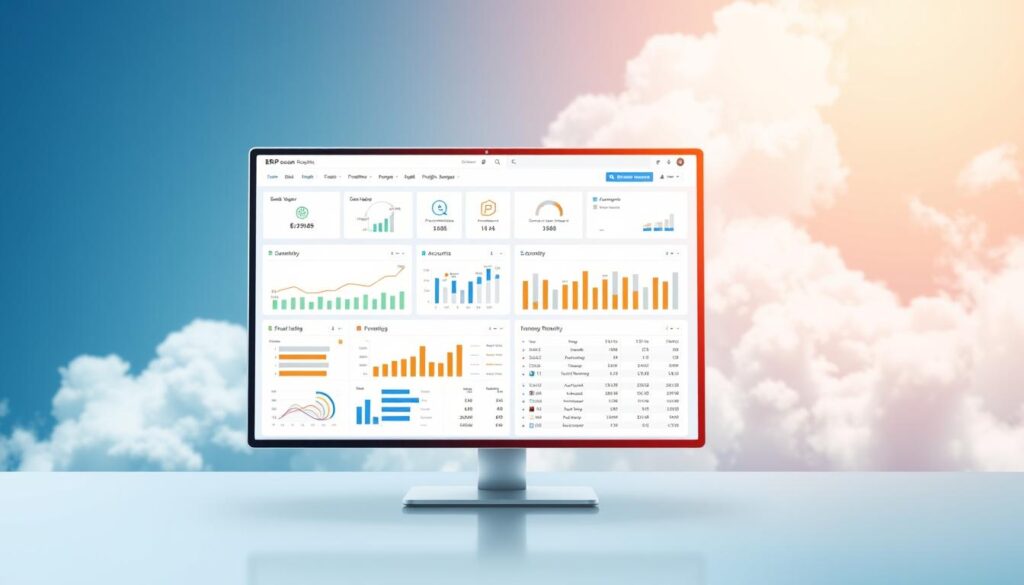
Modern ERP systems bring advanced accounting tools. They handle transactions automatically, give real-time reports, and improve financial analysis. These tools help businesses make smart choices with current financial data.
Automated reconciliation and compliance management are also important. They cut down on mistakes and keep businesses in line with rules.
Integration with Other Business Processes
ERP accounting solutions are great because they work well with other business areas. This includes buying, managing stock, and selling. It makes information flow smoothly, improving work efficiency and cutting down on extra data.
By linking different parts of the business, ERP systems help everyone work together better. This leads to better data analysis and decision-making. It gives a complete view of how the business is doing, helping managers find ways to get better.
Key Benefits of ERP Systems for Accounting Departments
ERP systems help accounting departments a lot. They make processes smoother and more accurate. ERP combines different financial tasks into one system. This lets accounting teams work better and make smart choices.
Streamlined Financial Processes
ERP systems handle tasks like accounts payable, accounts receivable, and general ledger management automatically. This cuts down on mistakes and lets staff do more important work. The main benefits are:
- Faster closing cycles
- Improved financial reporting
- Enhanced cash flow management
Enhanced Data Accuracy and Real-Time Reporting
ERP systems give a single, true source for financial data. This means accuracy and consistency everywhere. With real-time reports, accounting teams get current financial info. This helps them make better choices. The benefits are:
- Real-time financial insights
- Improved forecasting and budgeting
- Enhanced financial analysis
Improved Compliance and Audit Capabilities
ERP systems help accounting teams follow regulatory requirements and standards. They offer automated audit trails and reports. This lowers the chance of not meeting rules and makes audits easier. The main benefits are:
- Automated compliance reporting
- Enhanced audit trails
- Reduced risk of non-compliance
ERP systems make accounting departments work better. They save money and add more value to the company.
Selecting the Right ERP Accounting Solution in 2025
Choosing the right ERP accounting solution is key for businesses in 2025. They must look at several important factors. This ensures they pick a system that fits their needs.
Cloud-Based vs. On-Premise Solutions
Deciding between a cloud-based ERP and an on-premise solution is crucial. Cloud-based ERPs offer flexibility and scalability. They let businesses access their financial data from anywhere.
Gartner says, “Cloud-based ERP solutions are becoming the norm. They offer businesses greater agility and reduced upfront costs.”
“The cloud-based ERP market is expected to continue its rapid growth. This is driven by the need for greater flexibility and scalability.”
Industry-Specific ERP Systems
Industry-specific ERP systems.
Different industries have unique needs. An ERP system made for a specific industry can offer more relevant features.
For example, ERP systems for manufacturing often have advanced inventory management features.
Scalability and Growth Considerations
Scalability is vital when picking an ERP accounting solution. Businesses should choose a system that can grow with them. It should adapt to changing needs and expanding operations.
A scalable ERP solution helps companies avoid the costs and complexities of switching systems.
By carefully evaluating these factors, businesses can find an ERP accounting solution. This solution supports their financial management needs and drives long-term success.
Implementing an ERP System for Accounting
Setting up an ERP system is key for accounting teams. It helps make financial tasks smoother, cuts down on mistakes, and boosts reporting quality. You can pick from cloud-based or on-premise ERP options. The setup process has several important steps.
Planning and Requirements Gathering
The first step is careful planning and gathering needs. You need to know what financial tasks your team does, check current processes, and figure out what an ERP system should have. Important tasks include:
- Conducting stakeholder interviews
- Analyzing financial workflows
- Defining user roles and access levels
- Establishing project timelines and budgets
Data Migration and Integration Strategies
Moving data and integrating it well is key for ERP success. This means moving your current financial data to the new system and making sure it works with other business tasks. Good practices are:
- Data cleansing and validation
- Mapping data fields between old and new systems
- Testing data migration processes
- Ensuring compatibility with other business applications

Training, Change Management, and User Adoption
Good training and change management are crucial for users to get on board and for the ERP to succeed. This means giving detailed training, setting up support, and listening to user feedback. Ways to help users adopt the new system include:
- Developing user-friendly training materials
- Conducting hands-on training sessions
- Creating a support desk for troubleshooting
- Encouraging user feedback and continuous improvement
By focusing on these areas, companies can make the switch to their new ERP system smoothly. This way, they can get the most out of their ERP for accounting investment.
ROI and Cost Considerations for Accounting ERP Systems
Investing in an ERP system for accounting requires looking at ROI and costs. This helps businesses make smart choices about their investments.
Initial Investment vs. Long-Term Value
The cost of an ERP system includes licensing fees, implementation costs, and training expenses. These costs can be high upfront. But, the benefits like improved efficiency, better data accuracy, and smarter decision-making make it worth it.
Hidden Costs and How to Avoid Them
Hidden costs can come from customization, data migration, and ongoing support. To dodge these, plan your ERP implementation well. Work with experienced consultants and get good support contracts.
Measuring Success and Performance Metrics
To see if an ERP system is working, track important metrics. Look at financial reporting accuracy, how fast things get done, and how well users adapt. Checking these regularly helps find ways to get better and keep the system valuable.
Maximizing Accounting Efficiency with Enterprise Resource Planning
Businesses are always changing, and so are their accounting needs. Enterprise resource planning (ERP) systems are key to making accounting more efficient. They bring together different business areas, giving a full picture of a company’s finances.
- What is Alt Coin ? Full Guidance in Crypto Technology in 2025
- What is Ethereum 2.0 (Serenity) ? A Complete Guide to Crypto Technology
Using an ERP system can make financial tasks smoother, improve data quality, and meet legal standards. These advantages highlight why ERP is valuable for accounting.
When looking at ERP, it’s important to think about the cost and how it will pay off. This helps businesses make smart choices that help them grow and make more money.
In the end, using ERP can change how accounting works. It helps companies adapt to new market trends and stay ahead of the competition.
FAQ
Q-1 What is an ERP system, and how does it relate to accounting ?
An ERP system is a software that helps businesses run smoothly. It includes accounting and other important functions. It makes managing money easier and gives real-time insights.
Q-2 How do ERP systems improve financial reporting and analysis ?
ERP systems make financial reports better by giving real-time data. They automate tasks and offer advanced analytics. This helps businesses make smart choices and improve their finances.
Q-3 What are the key benefits of implementing an ERP system for accounting departments ?
ERP systems help accounting departments a lot. They make financial tasks easier, improve data accuracy, and help with audits. They also automate tasks, reduce errors, and offer insights for better decisions.
Q-4 How do I choose the right ERP accounting solution for my business ?
Choosing the right ERP system involves several steps. Look at cloud-based vs. on-premise options, industry-specific systems, and scalability. Consider your business needs, costs, user adoption, and customer support when making your choice.
Q-5 What are the costs associated with implementing an ERP system, and how can I measure ROI ?
ERP system costs include initial and ongoing expenses. To measure ROI, track metrics like accuracy and efficiency. Compare these to the costs to see the system’s value over time.
Q-6 How can I ensure a successful ERP implementation for my accounting department ?
For a successful ERP implementation, plan well and train users. Focus on data migration,integration, and change management. Good training and a clear plan help users adapt smoothly.
Q-7 What are some common challenges associated with ERP implementation, and how can I overcome them ?
ERP implementation can face challenges like data migration and user resistance. Overcome these by planning well, training thoroughly, and managing change effectively. A good plan and support can help.
Q-8 How do ERP systems support compliance and audit requirements ?
ERP systems help with compliance and audits by managing financial data well. They automate processes and offer advanced tools for reports. This ensures financial transactions are tracked and recorded properly.


