

In the hustle and bustle of today’s business landscape, information isn’t just a nice-to-have; it’s the heartbeat of any organization. Whether it’s a small startup or a massive global corporation, every thriving company depends on timely, accurate, and relevant data to make informed decisions. This is where a Management Information System (MIS) steps in. So, what exactly is an MIS, and what role does it play? Let’s take a closer look at the vital functions of this essential business tool.
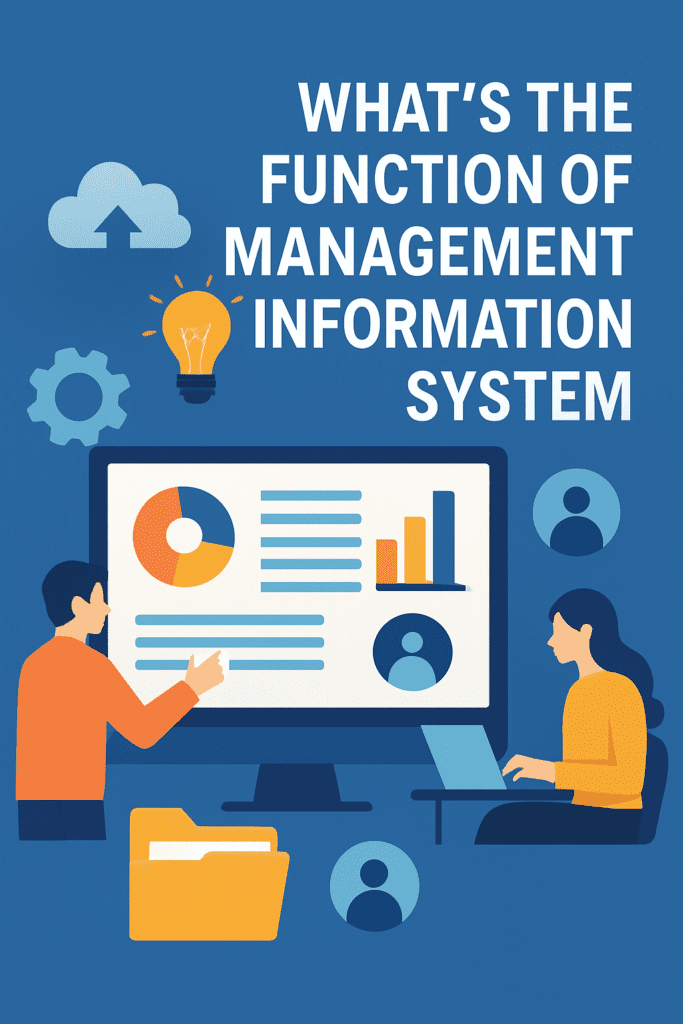
What is a Management Information System (MIS)? 🤔
At its essence, a Management Information System is a well-structured system that includes people, hardware, software, data, and procedures designed to collect, process, store, and distribute information.
This supports decision-making, coordination, control, analysis, and visualization within an organization. You can think of it as the central nervous system of a business, linking all the different components and equipping management with the insights they need to navigate the complexities of the market.
The Core Functions of an MIS
The functions of an MIS can be categorized into several key areas, each playing a crucial role in the system’s overall effectiveness. Let’s delve into these in detail.

Data Collection and Storage 📥
The primary and most essential function of an MIS is to gather and store data. This isn’t just about collecting any old information; it’s about sourcing the right data from a variety of internal and external channels. Internal data might encompass sales figures, inventory levels, employee records, and production costs.
On the other hand, external data could include market trends, competitor insights, or customer feedback. The MIS systematically collects this raw data and stores it in a central database, ensuring it’s readily accessible for future use. Without this vital function, there would be no information to analyze.
Data Processing and Analysis 📊
After the data is collected, the MIS doesn’t just let it sit there. It processes and analyzes the raw data, turning it into valuable information.

Information Retrieval and Dissemination 📧
An MIS is pretty much pointless if the information it handles isn’t accessible to those who need it. The information retrieval and dissemination function is all about ensuring that the right info gets to the right people at just the right time. This can be achieved through a variety of methods, such as:
Customizable Dashboards :- Offering a real-time, visual snapshot of key performance indicators (KPIs).
Scheduled Reports :- Automatically creating and sending out regular reports (daily, weekly, monthly) to the relevant managers.

Ad-Hoc Queries :- Empowering users to run their own searches and generate custom reports to tackle specific questions.
Alerts and Notifications :- Sending out automated alerts when certain thresholds are crossed, like low inventory levels or a sudden dip in sales.
This function is designed to make information flow smoothly throughout the organization, breaking down barriers and ensuring everyone is aligned.
Decision Support and Planning 📈
One of the most crucial roles of an MIS is to support decision-making and planning. It equips managers with the information they need to make informed choices at every level:
Operational Decisions :- For frontline managers, the MIS delivers data on daily operations, helping them manage inventory, schedule staff, and keep an eye on production.
Tactical Decisions :- For middle-level managers, it assists with resource allocation, budget management, and project planning.
“Learn More by Clicking Here”
Strategic Decisions :- For top executives, the MIS provides high-level summaries and forecasts, which are essential for long-term strategic planning, market expansion, and policy development.
By delivering accurate and timely data, the MIS helps reduce uncertainty, allowing managers to make decisions based on solid data rather than guesswork or gut feelings.
Performance Monitoring and Control ✅
How can you tell if a business is on the right path to achieving its goals? That’s where a Management Information System (MIS) comes in handy. It helps monitor performance and control by comparing what’s actually happening against what was planned.
An MIS can keep tabs on a variety of metrics, from financial indicators like revenue and profit margins to operational efficiency measures such as production output and delivery times, as well as customer satisfaction levels.
If things start to stray off course, the system can alert managers, enabling them to take swift corrective action. This capability is crucial for maintaining accountability and ensuring that the organization stays aligned with its strategic objectives.
Collaboration and Communication 🤝
An MIS is also key in enhancing collaboration and communication within a company. By centralizing information and providing a single source of truth, it ensures that all departments are on the same page with the same data.
This helps to avoid misunderstandings and conflicts that can arise from using outdated or contradictory information. Features like shared dashboards, collaborative reporting tools, and integrated communication platforms can create a more cohesive and productive work environment.
“Learn More by Clicking Here”
The Evolution and Importance of MIS 🚀
The role of an MIS has changed dramatically with the rise of new technologies. Today’s MIS platforms often integrate with other systems like Enterprise Resource Planning (ERP), Customer Relationship Management (CRM), and Business Intelligence (BI) tools. This integration forms a comprehensive ecosystem that delivers even deeper insights.
Conclusion
A Management Information System is much more than just software. It’s a strategic asset that carries out a range of essential functions, from gathering and processing data to aiding in decision-making and performance monitoring.
By effectively leveraging the power of an MIS, businesses can not only survive but thrive in a competitive landscape, making smarter decisions, boosting efficiency, and ultimately reaching their strategic goals.
